Borderline Personality Disorder Therapy in Plano, TX
A steady, honest relationship for navigating intense emotions and unstable relationships.

Session Length:
Investment:
Locations
Insurance Accepted
I offer therapy for borderline personality disorder (BPD) and BPD traits in Plano, TX, in person at Connect to Thrive and online anywhere in Texas. BPD is treatable. My approach is relational and attachment based. I don't see you as something to tame. I'm here to help you find freedom and stability, and I stay steady when things get hard between us.
Do I have BPD, or do I just struggle with relationships?
You don't need a diagnosis to start. Most people who reach out to me don't lead with "BPD." They say something closer to "I can't seem to keep relationships." Friendships, partners, and jobs start out strong and then fall apart, and you're left wondering why it keeps happening.
Common signs of BPD traits include:
- Emotions that feel intense and fast moving
- A deep fear of being abandoned or left behind
- Relationships that swing between very close and very distant
- An unstable or shifting sense of who you are
- Impulsive decisions made in the middle of strong emotion
- A sense of emptiness that's hard to shake
- Being told you're "too much," and part of you believing it
If several of these fit, it's worth talking about. I work with people who have a formal BPD diagnosis and with people who only suspect it.
Is borderline personality disorder treatable?
Yes. BPD is one of the most misunderstood diagnoses, and the old idea that it can't change is wrong. In a study that followed people with BPD for ten years, the large majority reached a lasting remission of symptoms (Zanarini et al., 2010). Change is possible, and it's what this work is for.
What causes borderline personality disorder?
I see BPD as growing out of an attachment wound from early childhood. Research points to a mix of things, including temperament and genetics, but when closeness felt unpredictable growing up, loving someone and fearing they'll leave can get wired together. The intense reactions, the push and pull in relationships, and the fear of abandonment all make sense as ways a younger you learned to stay safe.
That's why I don't see BPD as a "bad personality." It's a pattern with a history, and patterns can change. If this sounds familiar, you may also relate to what anxious attachment looks like in adult relationships or how trauma affects relationships.
How do you treat BPD?
My approach is relational psychodynamic and attachment based. I'm not trained in DBT (dialectical behavior therapy), and I want to be upfront about that. DBT has strong research behind it, and if it's what you're looking for, a DBT therapist is a great fit. I do draw on practical tools to help you regulate and stabilize when emotions run hot. In my experience, though, skills on their own often don't reach the attachment wounds driving the pattern.
So we work on both. We build steadiness in the moment, and we look at where the pattern started and how it shows up in your relationships today, including the one with me. Read more about my relational, attachment-based approach.
What if therapy hasn't worked for me before?
Many of my clients tell me they've seen therapists before and it didn't work out. Some felt judged. Some felt dropped when things got intense. My approach is to stick with you, even when it feels like we're at odds.
Those moments are often the best time for healing. If you get angry with me, pull away, or test whether I'll stay, we don't pretend it didn't happen. We talk about it. I stay steady, and you get to experience a secure relationship that bends without breaking. Over time, that repair helps heal the wounds that keep the cycle going.
What does progress look like in BPD therapy?
Progress looks like being able to hold onto yourself under stress. Early on, a tense moment in session might send you spiraling or questioning whether the relationship is safe. Over time, you begin to trust and regulate in those same moments. Clients often find they begin to:
- Feel emotions without being completely swept away by them
- Build relationships that feel more stable
- Understand their patterns instead of feeling confused or ashamed by them
- Trust themselves more
This is real, sometimes slow work. How long it takes depends on your history and goals, and we check in on progress together along the way.
Do you diagnose BPD?
I'm not quick to diagnose. If I sense a formal evaluation would help you, I'll recommend one. My Indigenous background shapes how I think about labels, because for some people and communities a diagnosis can do more harm than good. Your care and wellbeing come before any label.
One practical note: if you want a superbill for out-of-network reimbursement, insurance requires a diagnosis on it. See therapy rates and insurance for details.
My partner might have BPD. Can I reach out for them?
Yes, and it's common. About half the time, the first call comes from a partner who is living with the swings in the relationship. The other half, it's the person themselves, who has noticed how hard it is to keep relationships steady. Therapy works best when the person with the traits chooses to come in, so a free consultation is a good place to talk through how to bring it up.
I can work individually with either you or your partner, but not both. When BPD traits are the main issue in a relationship, I believe a separate couples therapist is the better guide for the couples work. I wrote a full guide for partners: does my partner have BPD?
Can I do BPD therapy if I self-harm?
Your safety comes first. In my practice, if you are currently self-harming, I refer you to a higher level of care, such as a partial hospitalization program (PHP), and I'll help you find one before we start weekly therapy. Some other therapists, especially DBT programs, do treat self-harm in weekly outpatient care. If you've self-harmed in the past but aren't now, I'm glad to work with you.
If you're in crisis right now, call or text 988, the Suicide and Crisis Lifeline, or go to the nearest emergency room.
Where do you offer BPD therapy?
In person at Connect to Thrive in Plano, and online anywhere in Texas. Sessions are $110, private pay, and last 45 to 55 minutes. HSA and FSA cards are accepted.
Related reading: complex trauma therapy and therapy for narcissistic traits.
How do I get started with BPD therapy?
- Step 1: Free Consultation. A low-pressure 15-minute call to see if this feels like a fit.
- Step 2: First Session. We start building the relationship, and I get a sense of your history and what you're hoping for.
- Step 3: Ongoing Work. Steady sessions where we build trust over time and work through the hard moments together.
You are not too much for this room. When you're ready, schedule a free 15-minute consultation.
References
Zanarini, M. C., Frankenburg, F. R., Reich, D. B., & Fitzmaurice, G. (2010). Time to attainment of recovery from borderline personality disorder and stability of recovery: A 10-year prospective follow-up study. American Journal of Psychiatry, 167(6), 663-667.
Common Questions
A few things people usually want to know before reaching out. If you don't see your question here, feel free to ask during your free consultation.
Book a consultationIs borderline personality disorder actually treatable?
Yes. BPD is one of the more misunderstood diagnoses, but long-term research shows most people see their symptoms ease substantially over time. Change is genuinely possible.
I've been told I'm 'too much' by people in my life. How is this different?
In here, there's no such thing as too much. I bring my honest, real self into the room with you, which means you get an actual relationship, not a clinical distance, to practice being fully yourself in.
Do you use DBT for BPD?
I'm not DBT trained. My approach is relational psychodynamic and attachment based, and I draw on practical regulation tools when they help. We work on steadiness in the moment and on the attachment wounds underneath the pattern.
Will you diagnose me?
I'm not quick to diagnose. If a formal evaluation would help you, I'll recommend one, and I weigh whether a label will support your healing or do more harm than good. If you request a superbill for out-of-network reimbursement, insurance does require a diagnosis on it.
I'm scared therapy will just be another relationship I ruin. What if that happens here?
That fear makes a lot of sense given your history, and it's actually welcome here. If ruptures happen between us, and they might, we'll work through them together. That repair is often where the real growth happens.

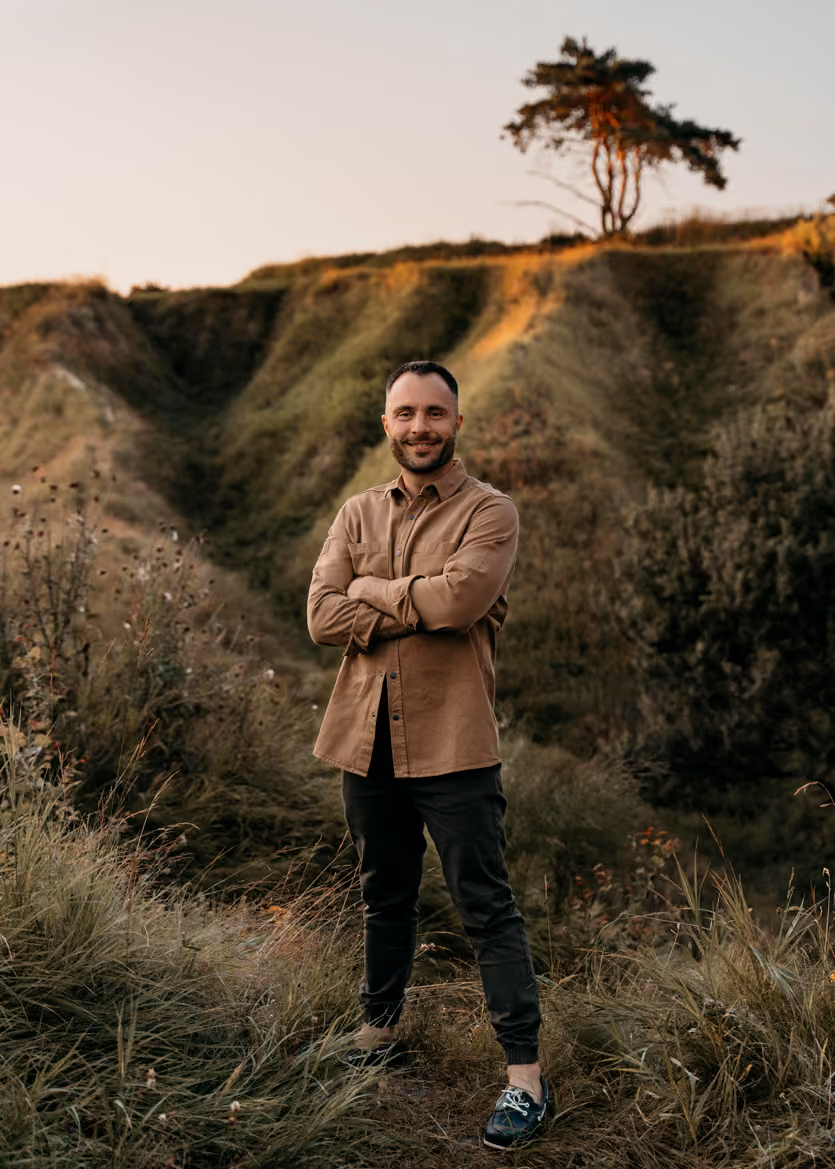
Hi, I'm Aaron Helm, LPC-Associate.(1)
I work with adults working through hard, heavy stuff, and with kids who are still learning to put words to their feelings. I believe therapy should feel like a real relationship, not a performance, so that's exactly what you'll get with me.
Related Services


Therapy for Men
- Men avoiding emotions
- Men feeling disconnected
- Men ready for change
Therapy for Women
- Women feeling overwhelmed
- People pleasers setting boundaries
- Women reclaiming themselves

Therapy for College Students
- Overwhelmed and anxious
- Struggling with identity and transition
- Ready to find clarity and direction

Therapy for Dads
- Dads overwhelmed and isolated
- Dads struggling with anger and marriage
- Dads ready to break generational patterns
Start Healing Today
Find Real Relief
Help Kids Thrive
Ready for genuine understanding for yourself or your child?