Key Takeaways:
- You can't diagnose your partner with BPD, and you don't need to. Focus on the pattern and how it affects you both.
- The push and pull is a way of testing whether a relationship is safe, often learned in an unstable childhood home.
- Your partner isn't simply choosing to act this way. These patterns are a learned survival strategy, which is why pressure rarely works.
- BPD can explain behavior but never excuses abuse. Anyone has the right to leave a relationship that feels unsafe.
- BPD is treatable. Individual therapy for each of you, and a separate couples therapist, can all help.
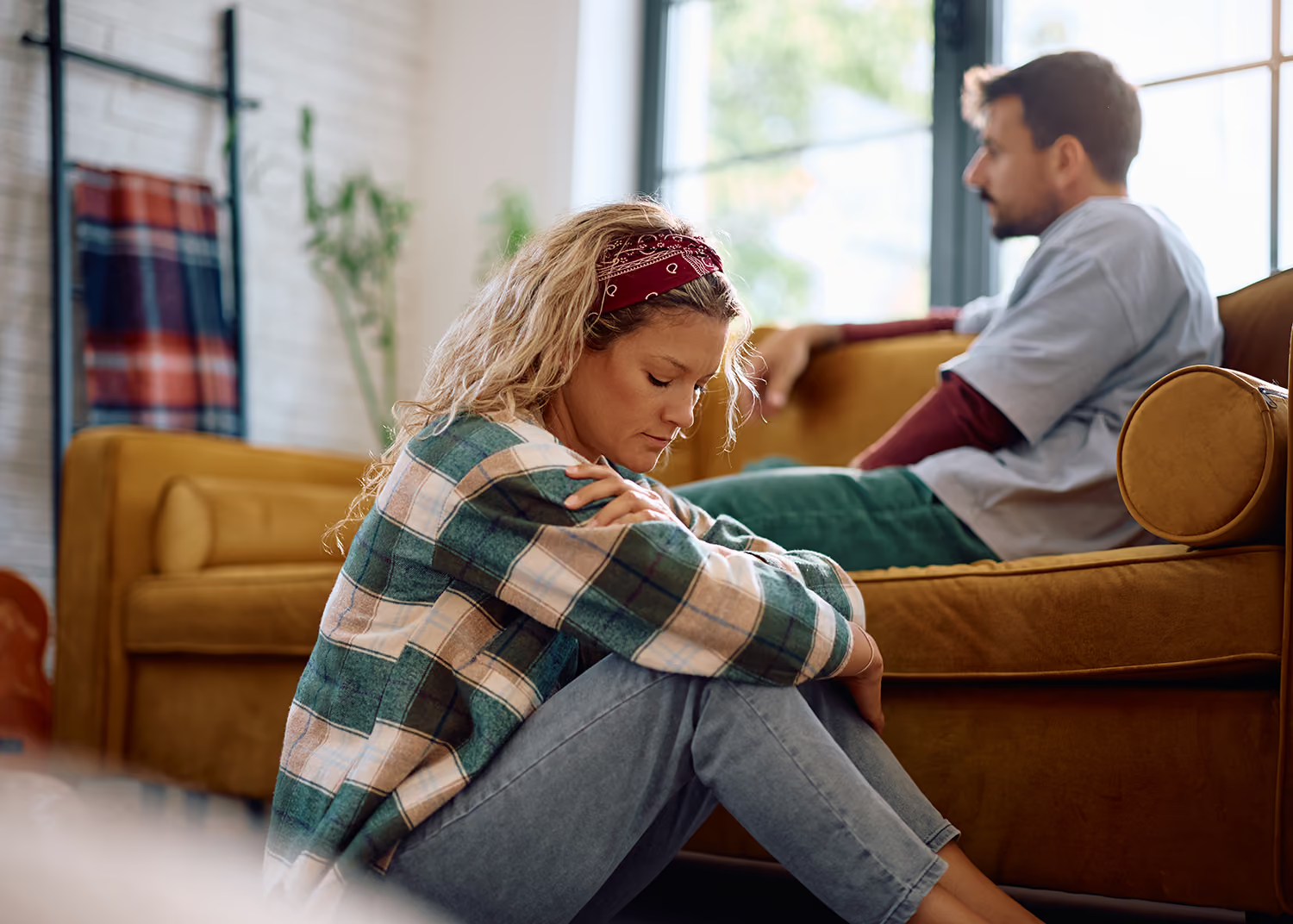
If you think your partner might have borderline personality disorder (BPD), you are probably living with a relationship that swings between very close and very painful. Intense love, sudden fear that you are leaving, big reactions to small things, and then calm again. You can't diagnose your partner, and you don't need to. What you can do is understand the pattern, protect your own footing, and help your partner find real support. BPD is treatable, and relationships can get steadier.
About half of the first calls I get about BPD come from a partner, not the person with the traits. Those calls almost always come from a place of care. The partner loves this person and wants them to thrive, and they are also emotionally exhausted. The impulsivity, the swings in emotion, and the anxiety every time they're apart have become overwhelming. If that sounds like you, you are in good company. Here is what I want you to know.
What are the signs my partner might have BPD?
BPD shows up most clearly in close relationships, which is why partners often notice it first. Common signs include:
- Intense fear of abandonment. A late text or a night out with friends can feel to them like proof you are about to leave.
- Relationships that swing. You go from feeling adored to feeling like the enemy, sometimes in the same day.
- Emotions that run hot and fast. Panic or despair that seems much bigger than the moment, then fades.
- Intense anger. Anger that's hard to control and can come out of nowhere.
- A shifting sense of self. Their goals, values, or even how they see themselves can change quickly.
- Impulsive choices under stress. Spending, drinking, or decisions made in the middle of strong emotion.
- A deep sense of emptiness. Feeling hollow or bored in a way that doesn't go away.
- Self-harm or talk of suicide. Threats, gestures, or self-injury, often when a relationship feels at risk.
- Feeling unreal or suspicious under stress. Spacing out, feeling detached from themselves, or briefly feeling like people are against them.
A diagnosis takes at least five of these nine patterns. They also have to show up across most of a person's life, not just in one relationship, and usually start by early adulthood. Everyone has a few of these on a bad day. BPD is when they shape how a person lives.
Partners also tend to notice a history of relationships that start strong and then fall apart. That's often what brings people to therapy. When someone with BPD traits calls me themselves, they rarely say "BPD." They say something like, "I can't seem to keep relationships."
Can I tell if my partner has BPD?
No, and it's worth resisting the urge to try. BPD is a clinical diagnosis that takes a careful assessment over time. A partner, a quiz, or a video can't make it. Many people show some of these traits under stress without having the disorder, and other conditions, like complex trauma (C-PTSD) or bipolar disorder, can look similar.
BPD is also less rare than people think. In the United States, the estimated median prevalence is about 2.7 percent of adults, and it may be as high as 5.9 percent (Merck Manual Professional Version).
What helps more than a label is noticing the pattern and how it affects both of you. You can take the pattern seriously without deciding what it is called. I am not quick to diagnose in my own practice either. For some people, a label helps. For others, it does more harm than good.
Why does my partner pull me close and then push me away?
One helpful way I understand the push and pull is as a way of gauging whether a relationship is safe. It's like asking, over and over, "Are you still here? Can I count on you?"
In my view, BPD grows out of an attachment wound from early childhood, though research points to a mix of things. Some people are born more emotionally sensitive, and genetics play a real part. When that sensitivity meets a home that felt unsafe, unstable, or dismissive of feelings, BPD patterns can take root. Not everyone with BPD had a hard childhood, so this isn't about blaming parents.
Many people with BPD did grow up in homes that felt unsafe or unstable. For some, the only way to get a parent's attention was to pull away in big ways or draw close in big ways. That might have meant risky behavior to get a parent to notice, or clinging to a parent to keep them from leaving.
Those same moves can show up in adult relationships. Your partner might pull away dramatically, do something risky, or cling tightly when they sense distance. It's painful to be on the other end of. Understanding where it comes from doesn't mean accepting hurtful behavior. It just helps you stop taking every swing as a verdict on you.
If this pattern sounds familiar from your own side of things too, you may relate to what anxious attachment looks like in adult relationships.
Is my partner choosing to act this way?
Not in the way it feels like they are. The most common misunderstanding I see in partners is the belief that the person is choosing to be this way, that they could just stop if they wanted to badly enough.
In reality, these patterns are often the only way your partner knows how to engage with the world. They're a learned survival strategy, one that got them through an unstable childhood. That doesn't mean your partner can't change, and it doesn't make the behavior okay. It does mean that pressure, punishment, or "just stop" rarely works. Change comes from new experiences of safety, usually in therapy, not from willpower alone.
Is it BPD, or is it abuse?
BPD can explain behavior. It does not excuse harm. Many people with BPD traits are never abusive, and treating everyone with the diagnosis as dangerous is unfair and wrong.
But if your partner's behavior includes threats, controlling your phone or money, cutting you off from friends and family, or physical harm, that is abuse, whatever the cause. Your safety comes first. You can call the National Domestic Violence Hotline at 1-800-799-7233, any time. If you are in immediate danger, call 911.
Whether or not your partner has BPD, both people in a relationship have the right to leave if they feel unsafe. That is true in every relationship. If your partner isn't physically or emotionally harming you, though, it may be worth both of you starting therapy, and then working on the relationship together as a couple, before deciding the relationship can't change.
If you have been on the receiving end of that kind of control, my page on recovering from emotionally abusive relationships may also help.
How do I talk to my partner about BPD?
Lead with the pattern, not the label. "I think you have BPD" usually lands as an attack, especially for someone already scared of being rejected. Talking about what you both experience lands softer.
- Pick a calm moment. Never in the middle of a fight, and never by text.
- Describe, don't diagnose. "When I'm late, it seems like you're sure I'm leaving, and then we both end up hurting."
- Lead with your care. "I'm bringing this up because I want us to work, not because I'm on my way out."
- Offer a next step, not an ultimatum. "Would you be open to talking to someone about this? I'll help you find someone."
Expect it to take more than one conversation. Fear of abandonment can make even a gentle suggestion feel like the beginning of the end. Staying steady and coming back to it later says more than getting it perfect the first time.
How can I support a partner with BPD without losing myself?
Supporting someone you love doesn't mean giving up yourself. The partners who do best tend to hold two things at once: warmth and clear limits.
- Validate the feeling, not every action. "I can tell you're really scared right now" is different from agreeing that you did something wrong.
- Be predictable. Say when you'll be back and follow through. Consistency calms the alarm more than reassurance does.
- Don't threaten to leave in a fight. Even if you're exhausted, it pours gasoline on the exact fear that drives the conflict.
- Set limits you can keep. "I'll talk about this, but not while we're yelling. Let's take 20 minutes and come back."
- Keep your own life. Friends, rest, and your own support aren't selfish. They keep you steady enough to stay kind.
How do I get my partner to go to therapy?
You can't make them, and therapy works best when the person with the traits chooses it for themselves. What you can do is make it easier to say yes. Offer to help find a therapist, sit with them during a consultation call, or start therapy yourself first.
Many of my clients tell me they've seen therapists before and it didn't work out. Some felt judged, and some felt dropped when things got intense. If your partner has been through that, it may help them to know that a good therapist expects hard moments and doesn't walk away from them. In my work, the times we're at odds are often the times real healing happens.
What does therapy for BPD look like?
I want to be upfront here. I'm not trained in DBT (dialectical behavior therapy), and DBT has some of the strongest research behind it for BPD. If that's the kind of therapy your partner wants, it's worth finding a DBT therapist. Other treatments with research support, including some that are psychodynamic and attachment based, focus more on the relationships underneath the symptoms. That's closer to how I work.
My approach is relational psychodynamic and attachment based. I do use practical tools to help clients regulate and stabilize. In my experience, though, skills on their own often don't reach the attachment wound driving the pattern.
So we work on both: steadiness in the moment, and the pattern underneath. Progress looks like your partner being able to hold onto themselves under stress. Instead of spiraling or questioning the whole relationship when conflict comes up, they can begin to trust and regulate in those moments. You can read more on my page about therapy for borderline personality disorder.
Should we try couples therapy?
It can help, especially once each of you has support of your own. Couples therapy gives you a place to slow down the cycle you keep getting caught in and practice repair with someone steady in the room.
Here is how I handle it in my own practice. When the main issue in the relationship is one partner's BPD traits, I don't see the couple together. I'll work individually with either the person with the traits or their partner, but not both. I believe a separate couples therapist is better placed to guide the relationship, so each of you has your own steady person and the couples work has its own. Couples therapy also isn't the right setting if there is ongoing abuse or someone doesn't feel safe being honest.
Can a relationship with someone with BPD work?
Yes. BPD is one of the most misunderstood diagnoses, and the old idea that it doesn't change is wrong. In a study that followed people with BPD for ten years, the large majority reached a lasting remission of symptoms (Zanarini et al., 2010). Full recovery, meaning fewer symptoms plus steady relationships and work, was harder and reached by about half. That's still real hope, and it's why the right support matters.
That doesn't mean every relationship should be saved, or that change will be fast. It means your partner isn't a lost cause, and neither is the relationship. When both people are willing to do their part, steadier love is possible.
What if my partner talks about suicide or self-harm?
Take it seriously every time, even if it has happened before. Stay with them if you can, and call or text 988, the Suicide and Crisis Lifeline. If someone is in immediate danger, call 911 or go to the nearest emergency room.
In my practice, if someone is currently self-harming, I refer them to a higher level of care, like a partial hospitalization program (PHP), before we start weekly therapy. Your partner's safety comes first. Other therapists, especially DBT programs, do treat self-harm in weekly outpatient care, so that isn't the only path. Past self-harm doesn't rule anyone out. I'm glad to work with people who have self-harmed before and aren't now.
Do I need therapy too?
Often, yes. Loving someone with BPD traits can leave you exhausted, second-guessing yourself, and walking on eggshells. Having your own space to sort out what you feel, what you need, and what you're willing to live with is good for you and for the relationship. I work with partners individually, as long as I'm not also treating the person with the traits.
The National Education Alliance for Borderline Personality Disorder also offers Family Connections, a free program for partners and family members of people with BPD.
Getting help in Plano
I offer individual therapy for adults with BPD traits and for partners who need support of their own, in person at Connect to Thrive in Plano and online anywhere in Texas. Sessions are $110, private pay, with HSA and FSA cards accepted. See rates and insurance for details, or read more about my relational, attachment-based approach.
Whether you're calling for yourself or for your partner, the first step is the same. Schedule a free 15-minute consultation and we'll talk through what's going on and what kind of support makes sense.
References
Merck Manual Professional Version. Borderline personality disorder (BPD). Merck & Co.
Zanarini, M. C., Frankenburg, F. R., Reich, D. B., & Fitzmaurice, G. (2010). Time to attainment of recovery from borderline personality disorder and stability of recovery: A 10-year prospective follow-up study. American Journal of Psychiatry, 167(6), 663-667.
Disclaimer:The content provided in this article is for informational and educational purposes only and is not intended as mental health advice, diagnosis, or treatment. Reading this material or interacting with this site does not establish a professional counselor-client relationship. These resources are not a substitute for professional mental health evaluation or therapy. If you or someone you know is in crisis or needs mental health support, please consult a licensed healthcare professional or contact a emergency crisis resource such as the 988 Suicide & Crisis Lifeline by calling or texting 988.